Specialist care for diabetic foot ulcers, infections, non-healing wounds and circulation problems with a focus on protecting foot health and preventing complications.
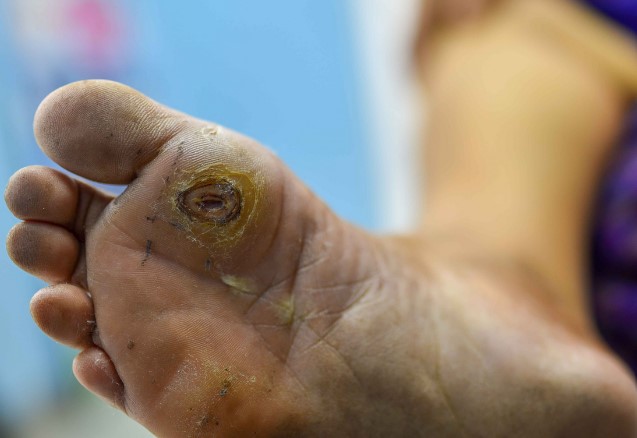
Specialist care for diabetic foot wounds, ulcers, infections and circulation problems that may delay healing.
Comprehensive assessment focused on wound healing, infection control, restoring circulation when required and protecting the affected limb.
Specialist evaluation for ulcers, wounds, infection and circulation-related foot problems.
Assessment of blood flow to identify circulation problems that may affect wound healing.
Treatment planning focused on controlling complications and preserving viable tissue whenever possible.
Coordinated management of wounds, circulation, infection and diabetes-related risk factors.
Diabetes can affect the nerves and blood vessels of the feet, increasing the risk of unnoticed injuries, ulcers, infections and delayed wound healing.
At Chiranjeevi Hospitals, diabetic foot care begins with evaluating the wound, circulation, sensation, infection and overall health of the affected foot.
Some wounds develop mainly because of pressure and reduced sensation, while others may be complicated by poor arterial blood flow or infection. Identifying these factors is important before planning treatment.
Care may include wound management, pressure relief, infection treatment and diabetes control. When reduced circulation is contributing to poor healing, vascular procedures may be considered to improve blood supply.
The goal is to support wound healing, control infection, protect healthy tissue and reduce the risk of serious foot complications.
People with diabetes should seek medical assessment if they notice a foot wound, blister, ulcer, swelling, redness, discharge, skin colour change or increasing foot pain.
Reduced sensation can sometimes make a foot injury less noticeable, so wounds should not be ignored simply because they are painless.
A wound that is not healing, a cold or discoloured foot, weak pulses, increasing infection or blackened tissue requires prompt specialist evaluation.
Early assessment helps identify problems such as neuropathy, infection and reduced blood circulation that can increase the risk of serious diabetic-foot complications.
Evaluation and treatment for diabetic foot problems affecting the skin, soft tissues, circulation and overall foot health.
Open wounds that may develop because of pressure, reduced sensation or poor circulation.
Foot wounds that remain open or show delayed healing despite routine care.
Infection affecting a wound or surrounding tissues that requires timely assessment and treatment.
Narrowing of leg arteries that reduces blood supply and may delay wound healing.
Nerve damage that may cause numbness or reduced awareness of foot injuries.
Wounds associated with inadequate arterial blood supply to the foot.
Severe tissue damage that may occur when blood supply is critically reduced or infection becomes advanced.
Repeated ulcer formation requiring evaluation of pressure, footwear, circulation and underlying risk factors.
A detailed assessment helps identify the factors preventing a diabetic foot wound from healing.
Evaluates wound depth, tissue condition, swelling, discharge and surrounding skin.
Assesses blood flow through the arteries supplying the leg and foot.
Non-invasive tests may help evaluate arterial circulation when poor blood flow is suspected.
May be advised to assess bone changes or deeper infection.
Provides detailed vascular imaging when further assessment of arterial disease is required.
Blood tests, wound samples or additional imaging may be advised when infection is suspected.
Treatment depends on the wound, infection, blood circulation, tissue condition and overall health of the patient.
Removal of unhealthy or dead tissue may help create a cleaner wound environment for appropriate healing.
Antibiotics and other treatment may be required when a diabetic foot infection is present.
Special footwear, devices or other methods may be used to reduce pressure over an ulcerated area.
A catheter-based procedure may be used to improve blood flow through narrowed or blocked arteries.
A stent may be placed in selected arteries to help maintain improved blood flow.
Creates an alternate pathway for blood flow when severe arterial blockages require surgical treatment.
Selected surgical and vascular procedures may be required to control infection, remove non-viable tissue and preserve as much functional tissue as possible.

CHIEF VASCULAR AND ENDOVASCULAR SURGEON
MBBS, DNB (GEN SURGERY), MNAMS
DrNB (VASCULAR SURGERY), FIVS (AUSTRIA), FEVS

Head of Operations
Vascular and Endo Vascular Surgery Team

Vascular Surgery Team
M.B.B.S, FELLOWSHIP IN CARDIOTHORACIC AND VASCULAR SURGERY.
A diabetic foot wound may be influenced by more than one problem. Reduced sensation can allow injuries to go unnoticed, repeated pressure can prevent an ulcer from closing, infection can damage surrounding tissue and poor blood flow can significantly delay healing.
For this reason, diabetic foot care requires more than routine dressing alone.
The wound is assessed together with circulation, infection, pressure points and diabetes-related risk factors. When arterial blood flow is reduced, vascular evaluation helps determine whether circulation can be improved using endovascular treatment or vascular surgery.
Treatment may also involve wound care, debridement, infection management and pressure relief.
At Chiranjeevi Hospitals, patients from Kukatpally, KPHB, JNTU, Nizampet, Miyapur, Moosapet and nearby Hyderabad areas can access specialist diabetic foot and vascular care.
One of the major concerns in a complicated diabetic foot wound is whether enough blood is reaching the tissues to support healing.
When arterial circulation is significantly reduced, the wound may remain open despite regular dressing and infection treatment.
Vascular assessment helps identify narrowed or blocked arteries supplying the affected foot. In suitable patients, blood flow may be improved through angioplasty, stenting or vascular bypass surgery.
At the same time, wound care, infection control, pressure relief and removal of unhealthy tissue may be required.
The treatment plan depends on the severity of the wound, infection, tissue viability, circulation and overall medical condition.
The aim is to address the factors delaying healing and preserve as much healthy, functional tissue as medically possible.
A diabetic foot ulcer is an open wound that may develop because of reduced sensation, repeated pressure, injury, poor circulation or a combination of these factors.
Healing may be delayed by poor blood circulation, infection, repeated pressure, uncontrolled diabetes or other medical problems.
Any new wound, ulcer, discharge, swelling, redness or skin colour change in a person with diabetes should be medically assessed, particularly if it is not improving.
Reduced arterial blood flow can contribute to tissue damage and make existing wounds more difficult to heal.
No. Treatment depends on the wound and underlying cause. Some patients need wound care, infection treatment and pressure relief, while others may require vascular or surgical procedures.
Limb-preservation care aims to manage infection, improve circulation when possible, treat damaged tissue and preserve functional tissue whenever medically feasible.
In suitable patients, reduced circulation may be treated using angioplasty, stenting or bypass surgery depending on the location and severity of arterial disease.
You can consult the diabetic-foot and vascular team at Chiranjeevi Hospitals, KPHB Phase 1, Kukatpally, Hyderabad.
Early specialist assessment can help identify infection, pressure and circulation problems that may be delaying wound healing.
Focused evaluation for diabetic wounds, ulcers and circulation problems.
Treatment planning aimed at protecting healthy tissue and foot function.
Endovascular and surgical options to improve circulation when appropriate.
Care addressing the wound, infection, pressure and blood-flow concerns.
Our expert team is ready to provide personalized care for you and your family. Book your appointment today and take the first step towards better health.

©2026 Chiranjeevi Hospitals