Specialist-led hair transplant and restoration care for receding hairlines, thinning areas and pattern hair loss, with personalized treatment planning.
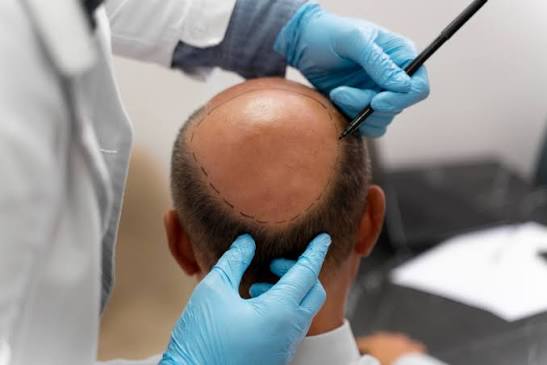

Personalized hair transplant care planned around your hair-loss pattern, donor area and restoration goals.
Specialist-led assessment focused on natural-looking results and long-term hair restoration planning.
Specialist assessment and personalized planning for suitable hair-loss concerns.
Hairline shape and density planned for a balanced, natural appearance.
Careful evaluation of donor-hair quality and availability before treatment.
Support from initial assessment and treatment planning through follow-up care.
Hair transplant treatment may be considered for suitable patients with permanent or progressive hair loss and an appropriate donor area.
At Chiranjeevi Hospitals, consultation begins with assessing the pattern of hair loss, scalp condition, existing density, donor-hair availability and individual restoration goals.
Hair loss may affect the frontal hairline, temples, crown or overall scalp density. The appropriate treatment depends on the type and extent of hair loss, age, donor area and possibility of further thinning.
Not everyone experiencing hair fall requires a transplant. Some patients may benefit from medical hair-loss treatment or supportive therapies first.
When transplantation is suitable, planning focuses on natural hairline design, appropriate graft distribution, donor-area preservation and realistic improvement.
A consultation may be helpful if you have a receding hairline, thinning temples, visible scalp, crown hair loss or long-standing pattern hair loss.
You may also consider specialist assessment if previous hair-loss treatments have not provided the expected improvement or you want to understand whether transplantation is suitable for you.
Hair transplant planning considers donor-hair availability, scalp health, age, pattern of thinning and possible future hair loss—not only the visibly thinning area.
Consultation also helps you understand expected coverage, treatment options, recovery, follow-up care and realistic outcomes before deciding on treatment.
Personalized assessment for common patterns of hair loss and reduced hair density.
Progressive thinning affecting the hairline, temples, frontal scalp or crown.
Gradual reduction in hair density across selected areas of the scalp.
Backward movement of the frontal hairline affecting its shape and appearance.
Reduced hair density around one or both temple areas.
Progressive thinning or visible scalp over the crown.
Loss of density across the front of the scalp.
General thinning requiring assessment before selecting treatment.
Selected permanent hair-loss areas may be evaluated for restoration.
A detailed assessment helps determine the most appropriate hair-restoration approach.
Reviews the pattern, duration and progression of hair loss.
Evaluates scalp health and conditions that may influence treatment.
Assesses donor-hair density, quality and availability.
Reviews existing density and areas requiring additional coverage.
Considers facial proportions, existing hairline and restoration goals.
Relevant health history, medicines and previous treatments are reviewed when required.
Treatment is selected according to the cause and extent of hair loss, donor availability and individual suitability.
Healthy hair follicles are transferred from a suitable donor area to areas requiring improved coverage.
Treatment may be advised to help manage ongoing hair loss and support existing hair.
Platelet-rich plasma may be considered as a supportive hair-restoration option for selected patients.
Growth factor concentrate therapy may be included in selected hair-restoration plans.
Guidance may be provided to support scalp health and existing hair.
Follow-up focuses on scalp healing, graft care, hair growth and continued hair-loss management.
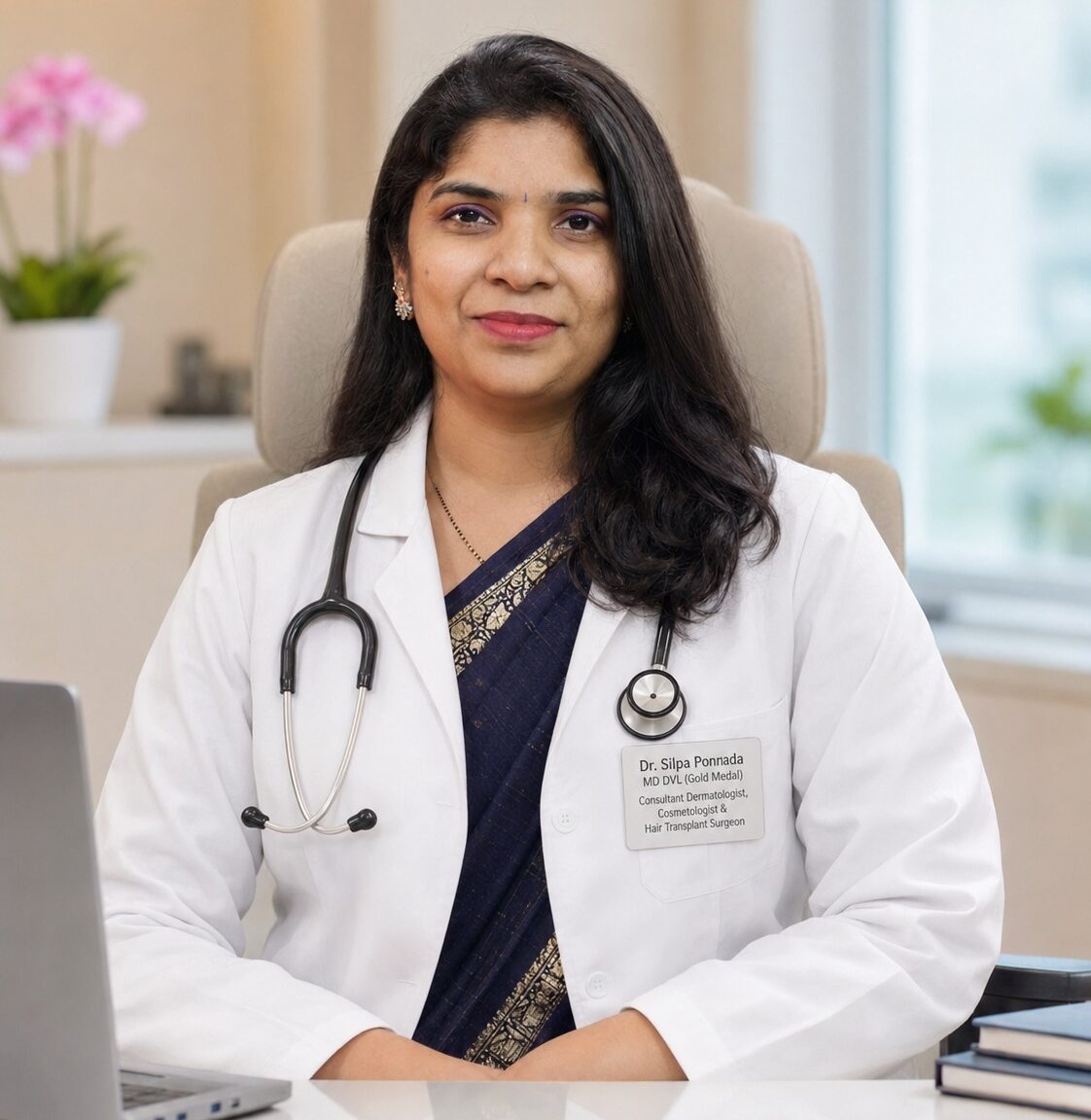
Consultant Dermatologist, Cosmetologist & Hair Transplant Specialist
MD DVL – Gold Medal
Hair transplant planning begins with understanding how hair loss has developed and how it may progress in the future.
The visible thinning area is only one part of treatment planning. Donor-hair quality, scalp health, age, existing density and individual expectations also need to be considered.
For suitable patients, transplantation may improve coverage around the frontal hairline, temples, crown or other selected areas. Graft distribution is planned according to available donor hair and the areas where restoration can provide meaningful improvement.
Some patients may also require medical hair-loss management or supportive therapies to maintain existing non-transplanted hair.
Our approach focuses on balanced improvement, responsible donor-area use and natural-looking restoration.
Patients from Kukatpally, KPHB, JNTU, Nizampet, Miyapur, Moosapet and nearby Hyderabad areas can access specialist hair-restoration consultation at Chiranjeevi Hospitals.
A natural-looking hair transplant depends greatly on careful hairline and donor-area planning.
Hairline position should complement facial proportions, age and the existing pattern of hair loss rather than appearing unusually low or dense.
The donor area also requires careful assessment because the number of suitable follicles available for transplantation is limited. Planning therefore considers where available grafts can provide the greatest visible improvement while preserving the donor area.
Graft direction, spacing and distribution are planned to blend with existing hair and support a natural appearance.
Patients with more extensive hair loss may require a different coverage strategy depending on donor availability and individual treatment goals.
The objective is balanced restoration while also considering possible future hair loss.
Suitability depends on the pattern and stability of hair loss, scalp health, donor-hair availability, age and individual expectations.
No. Some types of hair loss may respond better to medical treatment or supportive hair-restoration therapies.
Natural appearance depends on appropriate hairline design, graft distribution, direction and careful treatment planning.
Hair transplanted from an appropriate donor area is intended to provide long-term growth, although existing hair may continue to thin.
Hair growth develops gradually over several months, with the appearance continuing to improve as transplanted hair grows.
Supportive therapies may be considered for selected patients depending on their hair-loss pattern and treatment plan.
You can consult Dr. Silpa Ponnada at Chiranjeevi Hospitals, KPHB Phase 1, Kukatpally, Hyderabad.
Start with a detailed assessment of your hair loss, scalp and donor area to understand the treatment options suitable for you.
Hair-loss assessment and restoration planning under specialist guidance.
Care planned around your hair-loss pattern, donor area and goals.
Hairline and density planning focused on balanced restoration.
Guidance from consultation through treatment and follow-up care.
Our expert team is ready to provide personalized care for you and your family. Book your appointment today and take the first step towards better health.

©2026 Chiranjeevi Hospitals